
Socotra Sunbird Chalcomitra balfouri
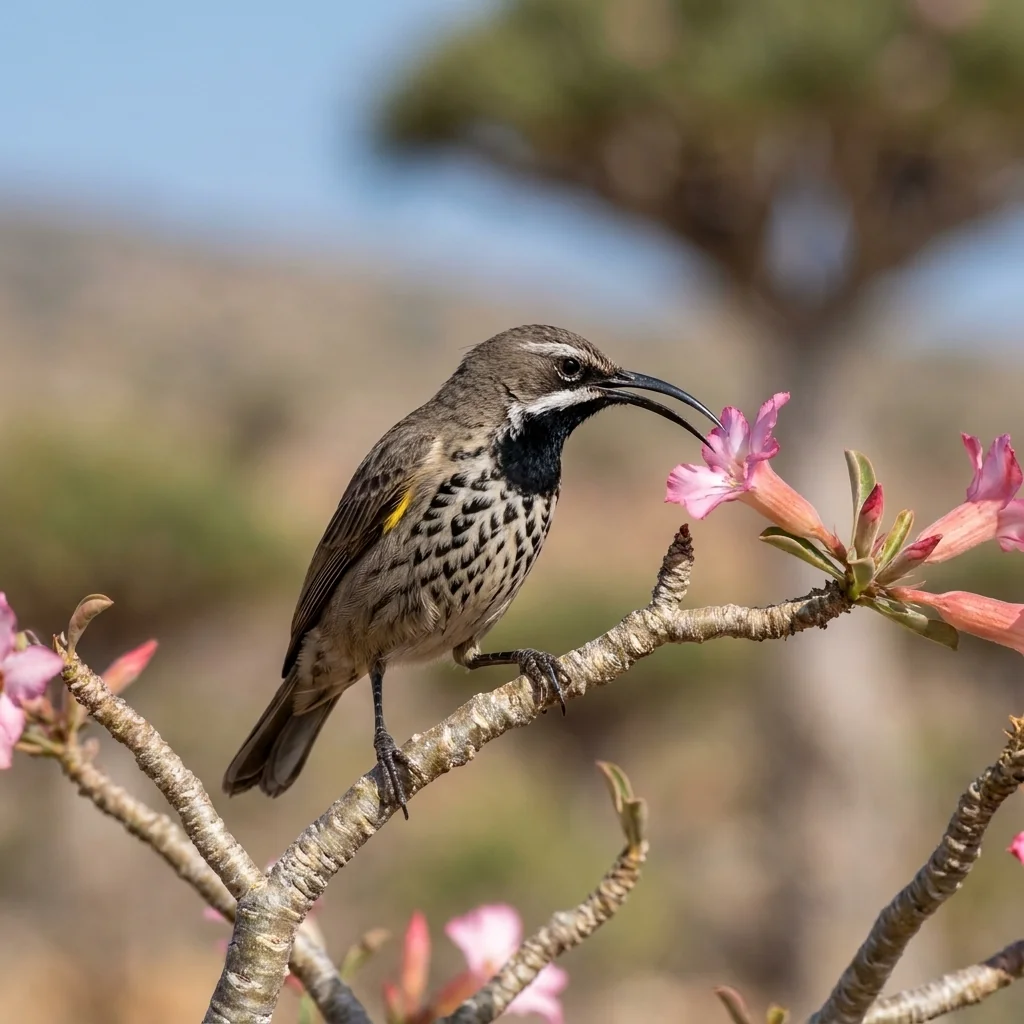
A small (12-13 cm) nectar-feeding bird endemic to Socotra and one of the island's primary pollinators. Males look nearly identical to females: brown-grey upperparts with bold black scaling, a distinctive black throat patch, white whisker stripes, and a small yellow shoulder tuft. The long, decurved bill is adapted for probing tubular flowers of endemic plants including Adenium and Boswellia. Widespread across the island wherever shrubby vegetation with flowering plants exists; most reliably found at Homhil Protected Area and Wadi Ayhaft. Population suspected declining due to overgrazing and habitat loss.
Where to see it
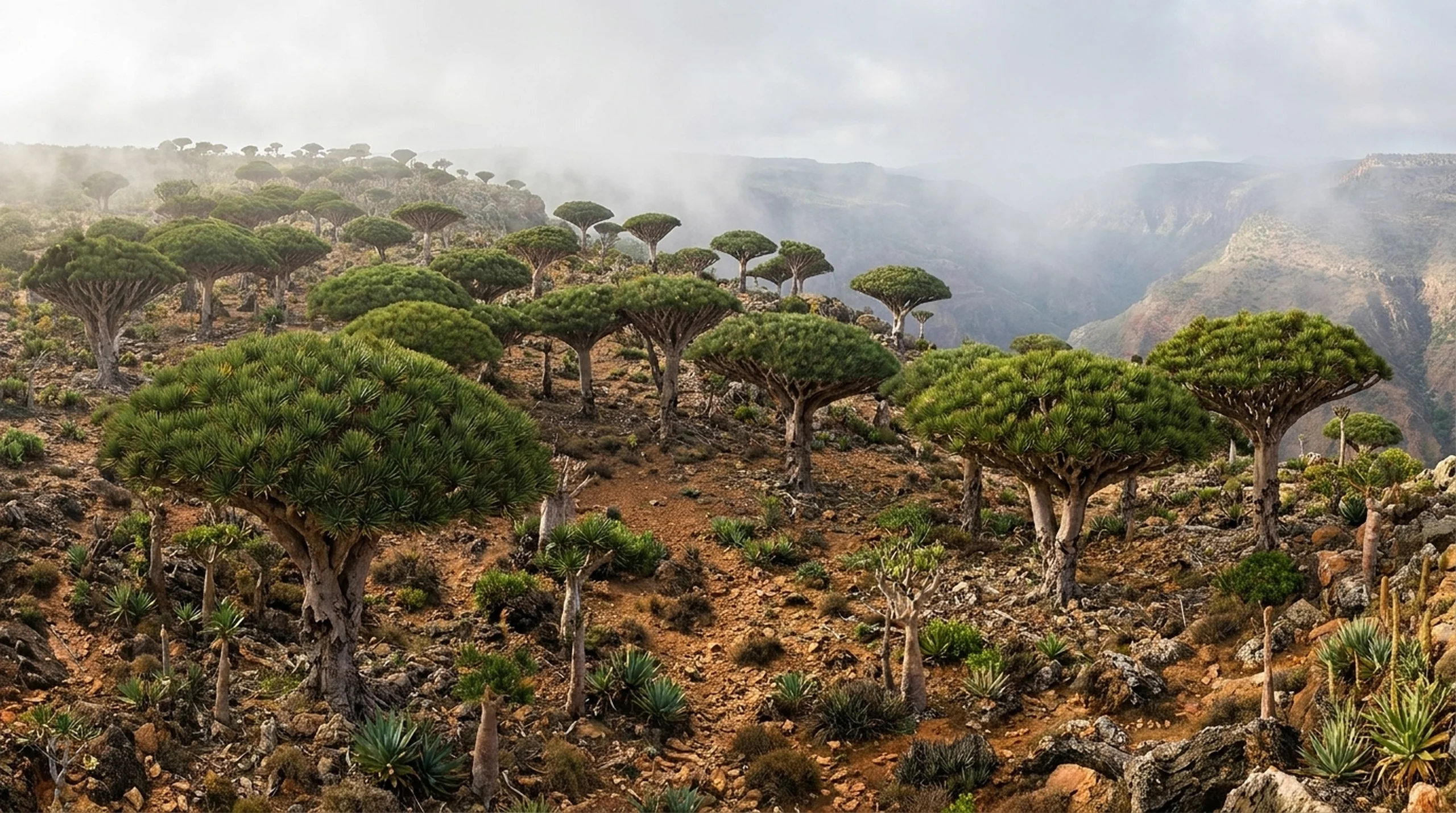
Diksam Plateau
forestPeak activity February-April when Adenium flowering concentrates birds around blooms
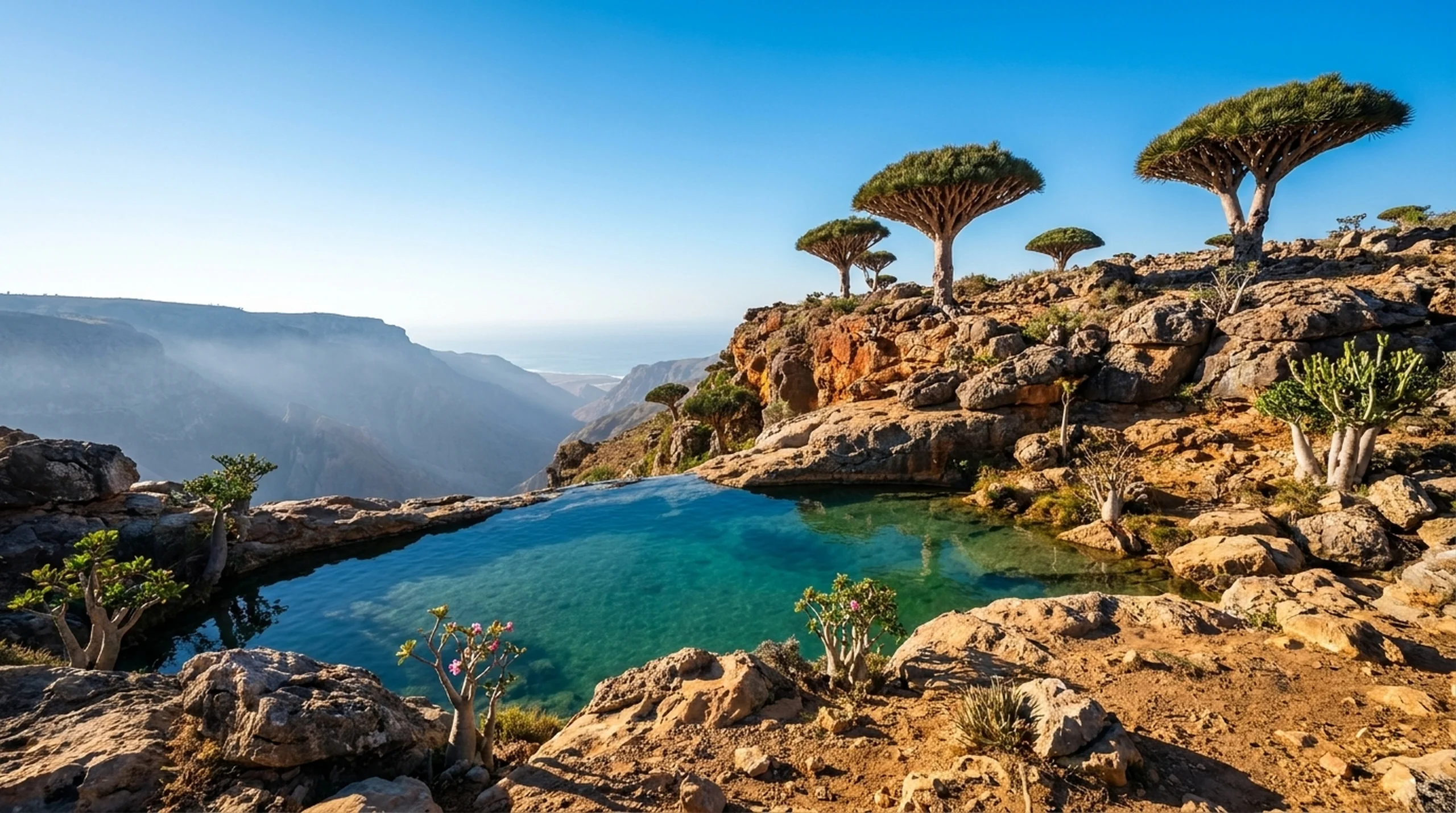
Homhil Protected Area
forestReliable at freshwater springs where poolside vegetation flowers; position near Adenium blooms

Mouri Beach
beachCoastal scrub vegetation behind the beach supports sunbird populations

Wadi Ayhaft
wadiPrimary birding site; sunbirds reliably found at flowering Adenium and Boswellia throughout the canyon
Planning a trip?
Photographing it
Position near a flowering Adenium or Boswellia and wait: sunbirds return repeatedly to the same blooms. 200-400mm telephoto. Midmorning (07:00-09:00) best. The black throat patch and white whiskers are the key ID features. The yellow shoulder tuft is only visible when the bird is relaxed. Allow settle time. Hover behavior at flowers gives sharp wing-spread shots.
Worth knowing
Unlike most sunbird species where males are brilliantly iridescent, the Socotra Sunbird's male looks nearly identical to the female, an unusual evolutionary reversal, likely shaped by millions of years of island isolation.
Conservation status
Least Concern (BirdLife 2025). Population suspected declining due to habitat degradation from grazing and wood clearance. No species-specific conservation program. Indirectly vulnerable to any decline in endemic flowering plants it pollinates.