
Socotra Starling Onychognathus frater
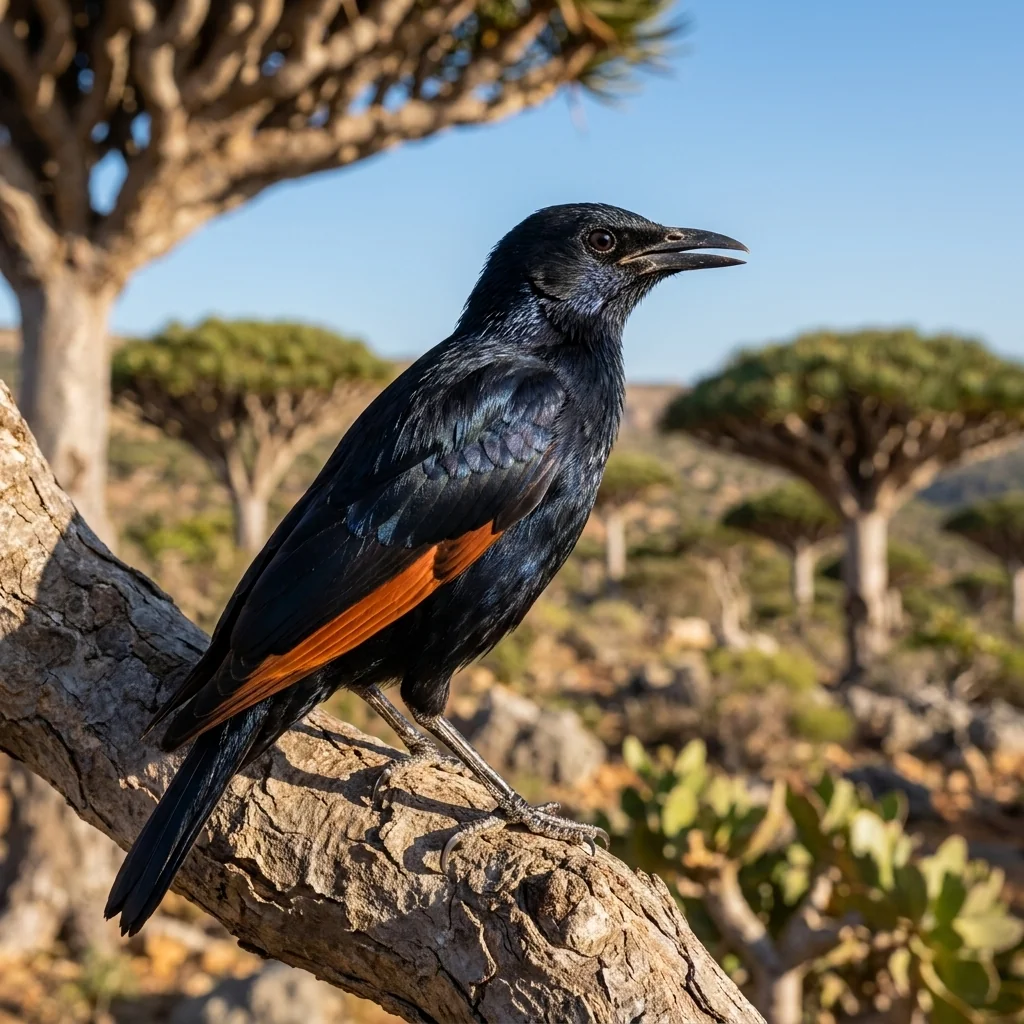
A robust, 25 cm starling with glossy black iridescent plumage and a defining field mark: bright rufous-chestnut primary wing feathers forming a vivid orange-red panel in flight. Highly social and commonly encountered in flocks. Has an intimate ecological relationship with the Dragon Blood Tree: it nests exclusively in its hollow branches, feeds on its berries, and disperses its seeds, making it critical to Dragon Blood Tree reproduction. Found island-wide from sea level to 1,500 m; most reliably seen at Diksam Plateau Dragon Blood Tree groves and near Hadibo. Probably the most frequently encountered endemic bird on a typical Socotra tour.
Where to see it
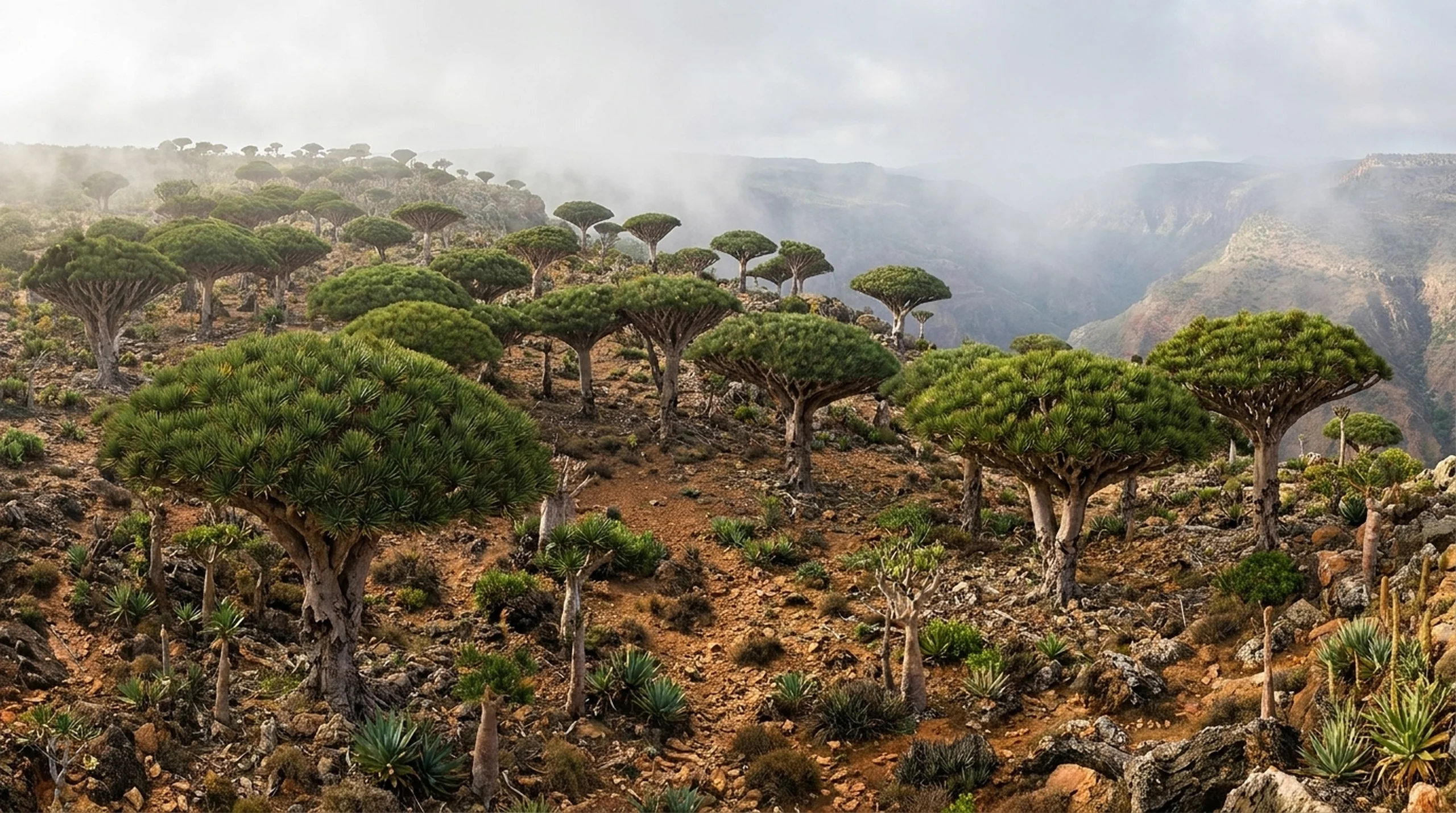
Diksam Plateau
forestNests exclusively in Dragon Blood Tree hollow branches: March-May nesting is most photogenic
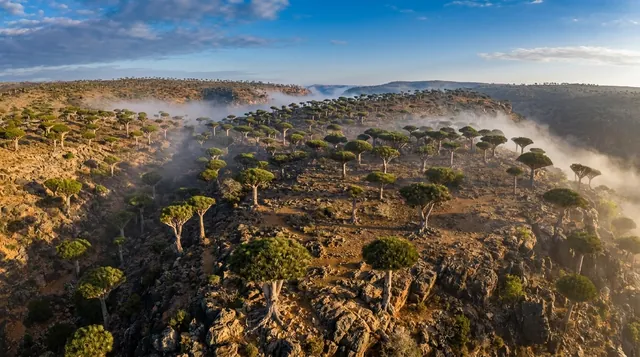
Firmihin Forest
forestNests in Dragon Blood Trees; highly visible and vocal throughout the forest

Hadibo
villageCommonly encountered around the town and nearby rural settlements where figs supplement foraging
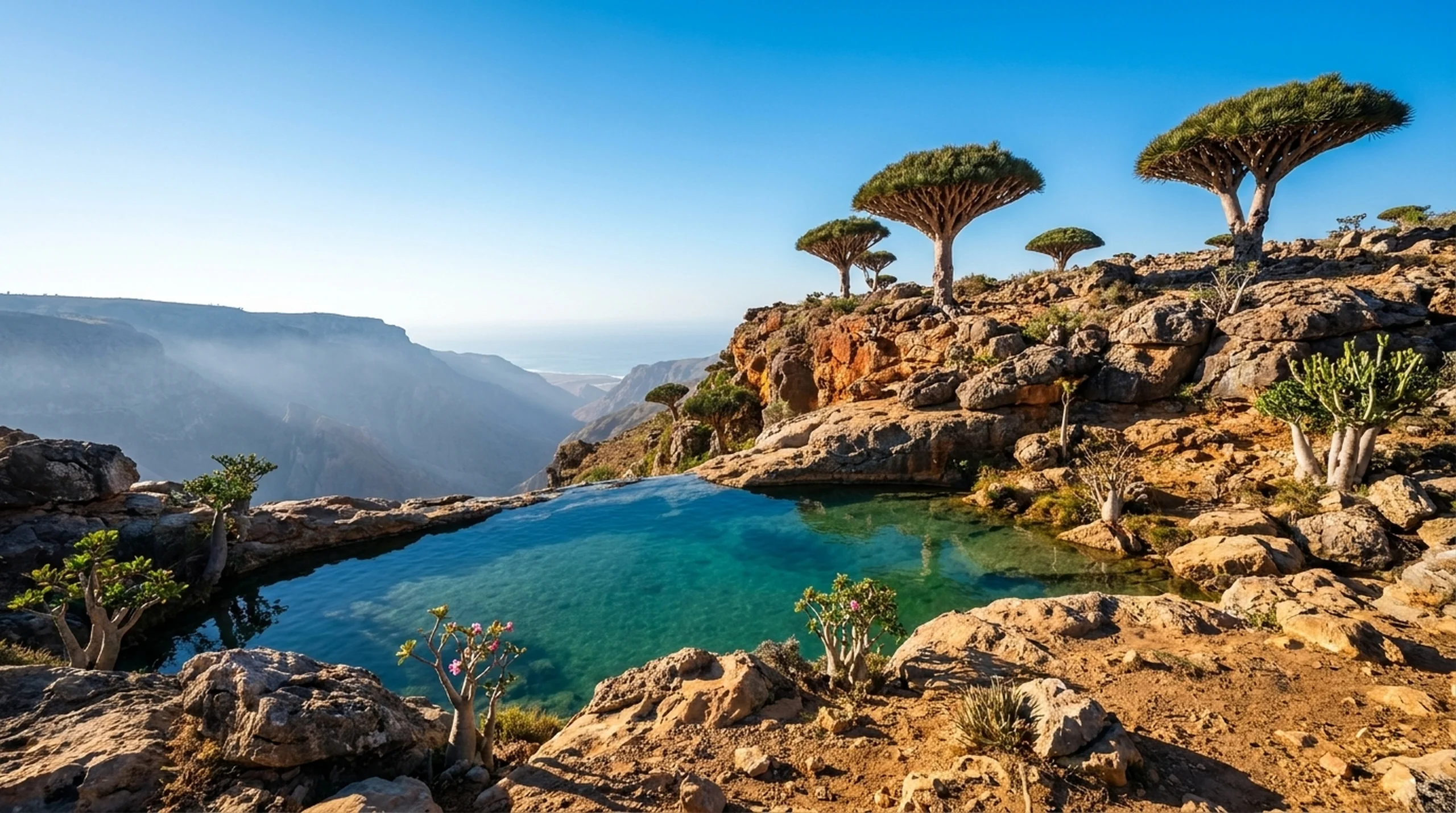
Homhil Protected Area
forestFlocks common around grove edges; iridescent sheen needs angled sunlight to register

Skand Peak
mountainCommon around village Dragon Blood Tree groves; perches prominently on dead branches

Wadi Ayhaft
wadiPresent throughout the wadi canopy; loud and active in early morning
Planning a trip?
Photographing it
200-400mm for perched portraits; 400-600mm for flight shots capturing the rufous wing flash. Iridescent sheen only visible in direct or angled sunlight. Flat overcast makes the bird look flat black. Position near Dragon Blood Tree grove edges for movement shots. The bird is not shy near settlements and tolerates close approach.
Worth knowing
The Socotra Starling nests exclusively in Dragon Blood Tree hollow branches and disperses its seeds, making it one of the few bird species entirely dependent on a single tree species for nest sites. Where Dragon Blood Tree regeneration fails, the starling eventually follows.
Conservation status
Least Concern (2024). Population ~7 birds/km² in suitable habitat; stable trend. Indirect long-term threat: declining Dragon Blood Tree regeneration (climate-driven) may eventually reduce nesting sites.