
Socotra in March
March is the month for plants and the start of the night-sky season, with the wind down to 13.6 km/h and the bottle tree bloom still running.
| March | 2001 to 2025 |
|---|---|
| Average day high | 29.6 C |
| Average night low | 23.7 C |
| Rain | 5 mm for the month |
| Wind | 13.6 km/h mean |
| Humidity | 64 percent |
Day high and night low are the average of each day's maximum and minimum in NASA POWER's daily data; rain, wind and humidity are its monthly climatology. Both v2.10.1, averaged over January 2001 to December 2025, accessed 2026-11-06. One grid cell of about half a degree covers Hadibo, the Diksam plateau and the south coast, so these are island-lowland figures: the plateau and the Haggeher mountains are cooler and take far more moisture than they show.
Getting there, and what is open
March is open and in peak season, with moderate crowds. Lead times are shorter here than earlier in the season: four to eight weeks is often enough for March and April dates, against two to four months for February.
The flight pattern does not change. Yemenia runs Jeddah to Socotra on Tuesdays and Thursdays, so a March trip is still built around those two days, and the return leg still makes a refuelling stop.
Sea and wind
March is the third calmest month of the year, a hair behind October. The monthly mean wind is 13.6 km/h, against October's 13.5, April's 11.1 and January's 21.2, and rainfall is 5 mm at 64 percent humidity.
Heat is what changes. Days average 29.6 C, more than two degrees up on February, with nights at 23.7 C, and the climb continues to April's 31.7. Plan the long walks for the two ends of the day from here on.
Bloom and wildlife
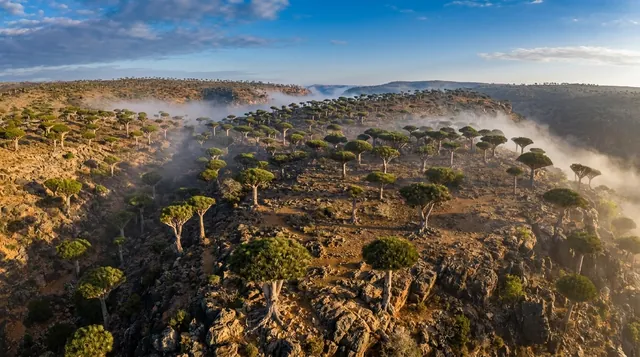
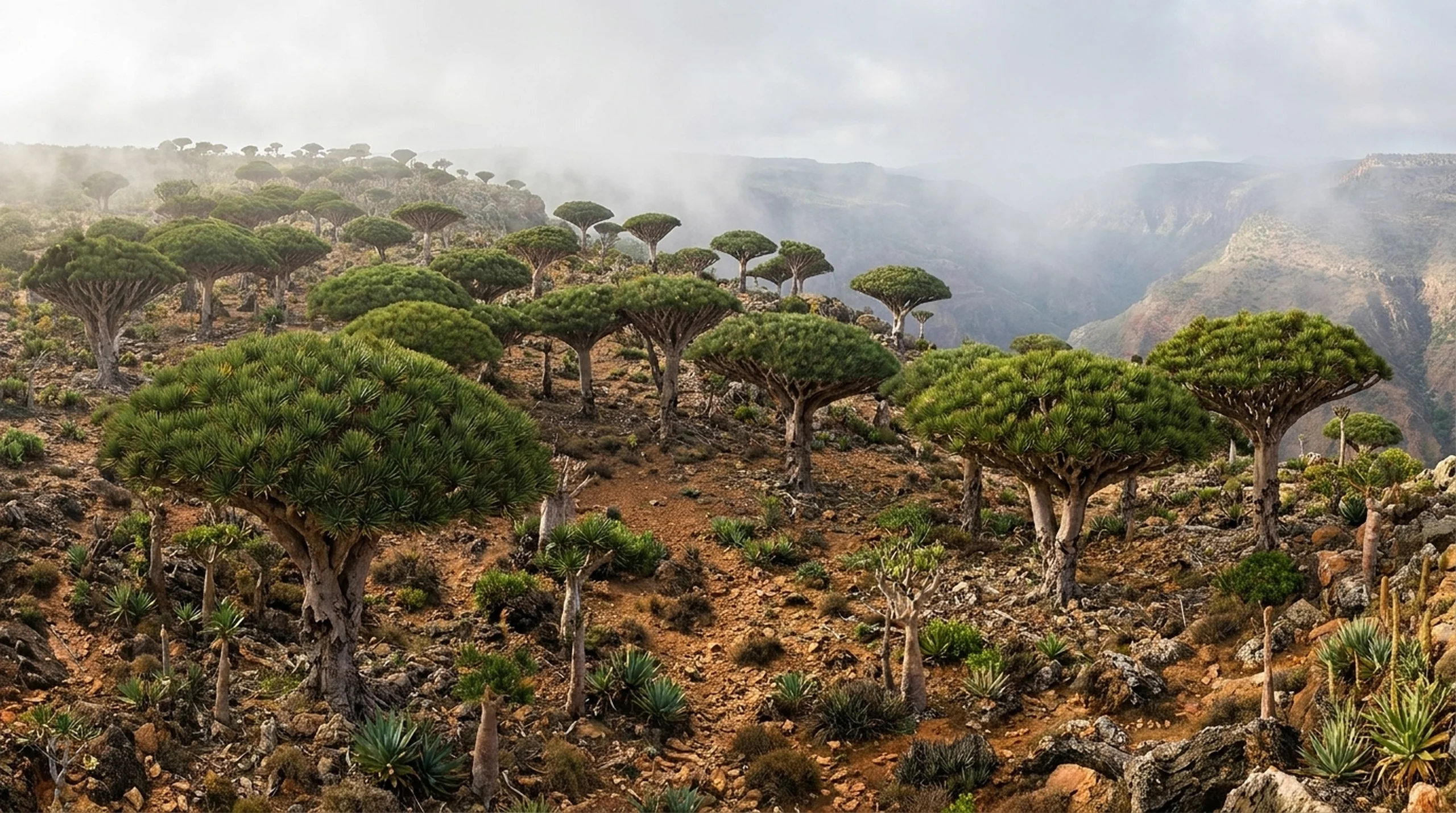
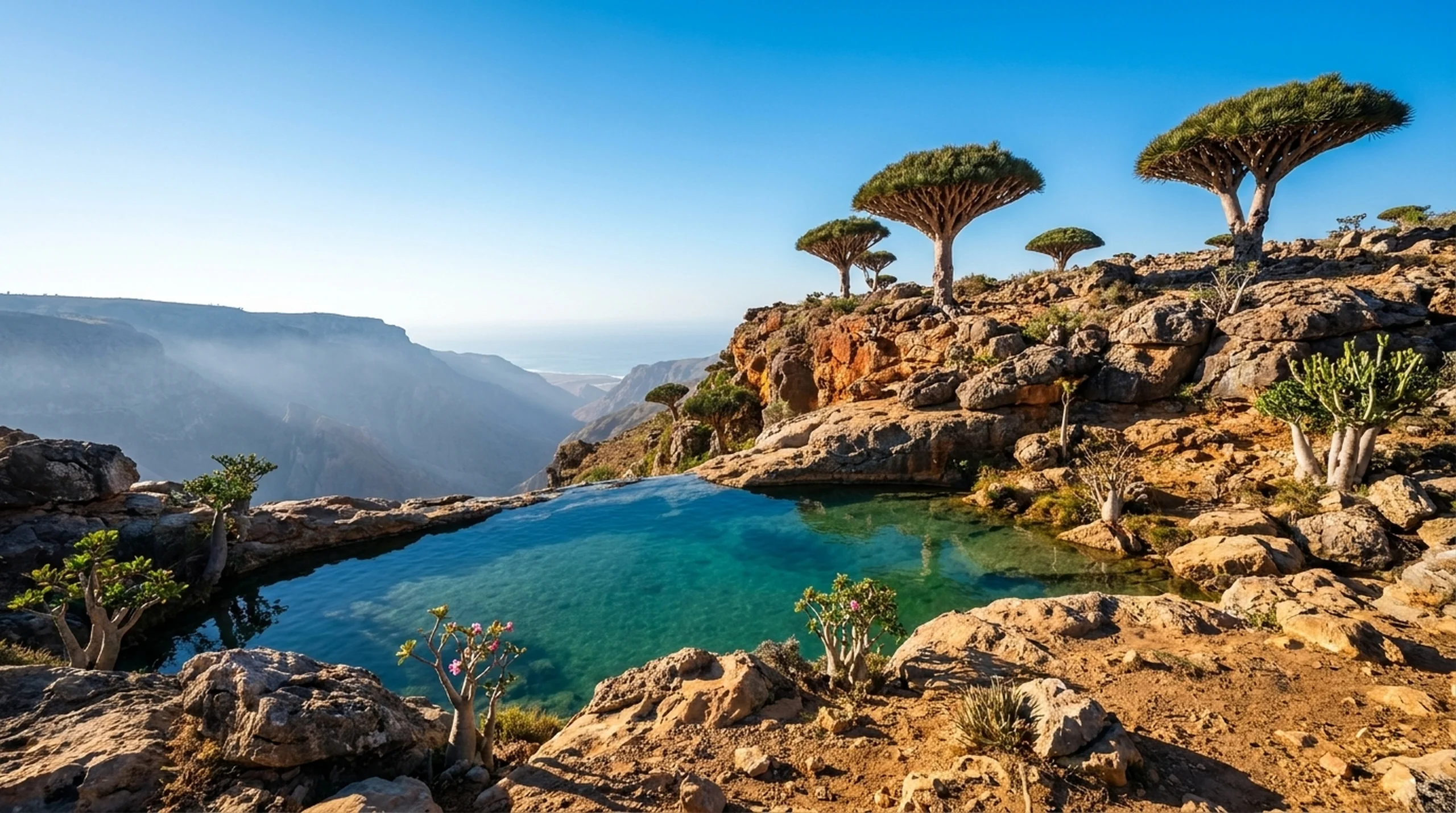
The bottle tree bloom runs through March, the second of its two peak months, and the frankincense at Homhil is still in its fresh-resin window. Both end here: from April the Adenium is finishing and from May it is dormant.
March opens the nesting window for the Socotra starling, which runs March to May and is the most photogenic state the bird reaches. It is reported to nest in hollow dragon blood branches and to eat and disperse the tree's seeds, so the nesting season puts it in the one habitat visitors come for.
The Socotra cisticola, the hardest of the endemic birds to see, is most vocal in the early morning during its breeding season, which the species notes place in March to May, but they say so by inference from related species rather than from observation on Socotra. Treat it as likely rather than established.
Photography
March is when the night sky becomes a reason to be here. The galactic core rises around 1am at the start of the month and about an hour earlier every fortnight, close to 11pm by the end of March, and stays up until dawn. Socotra has a measured sky quality reading of 21.88, taken by the photographer Benjamin Barakat, among the highest recorded anywhere, and Firmihin and the Diksam plateau have no light pollution to work against.
The composition the place notes single out is a foreground dragon blood tree under the arch of the Milky Way, shot wide, with an overnight camp so you get the same trees at dawn as well. The alternative at Firmihin is to point straight up through the layered canopy.
Good in March
Chosen from each place's own season and wind rating, not from the month alone.

Planning a trip?
March questions
Can you photograph the Milky Way from Socotra in March?+
What is in bloom on Socotra in March?+
Is March too hot for Socotra?+
Sources
- NASA POWER, monthly climatology and daily data, version v2.10.1, January 2001 to December 2025, accessed 6 November 2026
The data was obtained from National Aeronautics and Space Administration (NASA) Langley Research Center's Prediction Of Worldwide Energy Resources (POWER) project funded through the NASA Earth Science Division. The data was obtained from the POWER Project's v2.10.1 version on 2026/11/06.
- socotra.guide, The best time to visit Socotra