
Socotra Frankincense Tree Boswellia elongata
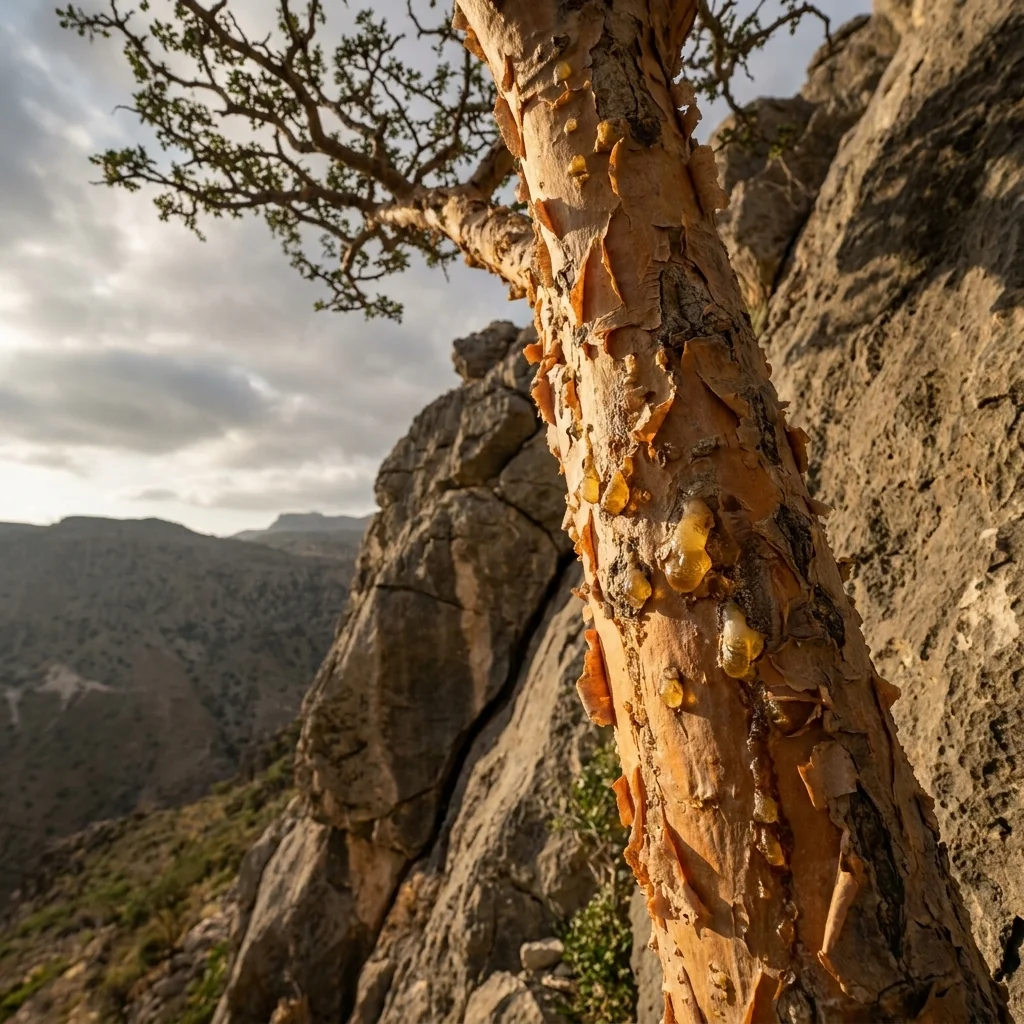
One of 11 frankincense tree species endemic to Socotra and the most accessible, forming a rare intact Boswellia woodland at Homhil Protected Area. A small to medium tree (4-8 m) with distinctively papery, peeling orange-buff bark and amber-yellow frankincense resin that oozes naturally from the trunk without bark damage, unique among Boswellia species globally. Among the finest frankincense on Earth. Traded from Socotra for 5,000+ years. Found at Homhil Protected Area on the standard trekking route (500-800 m elevation).
Where to see it
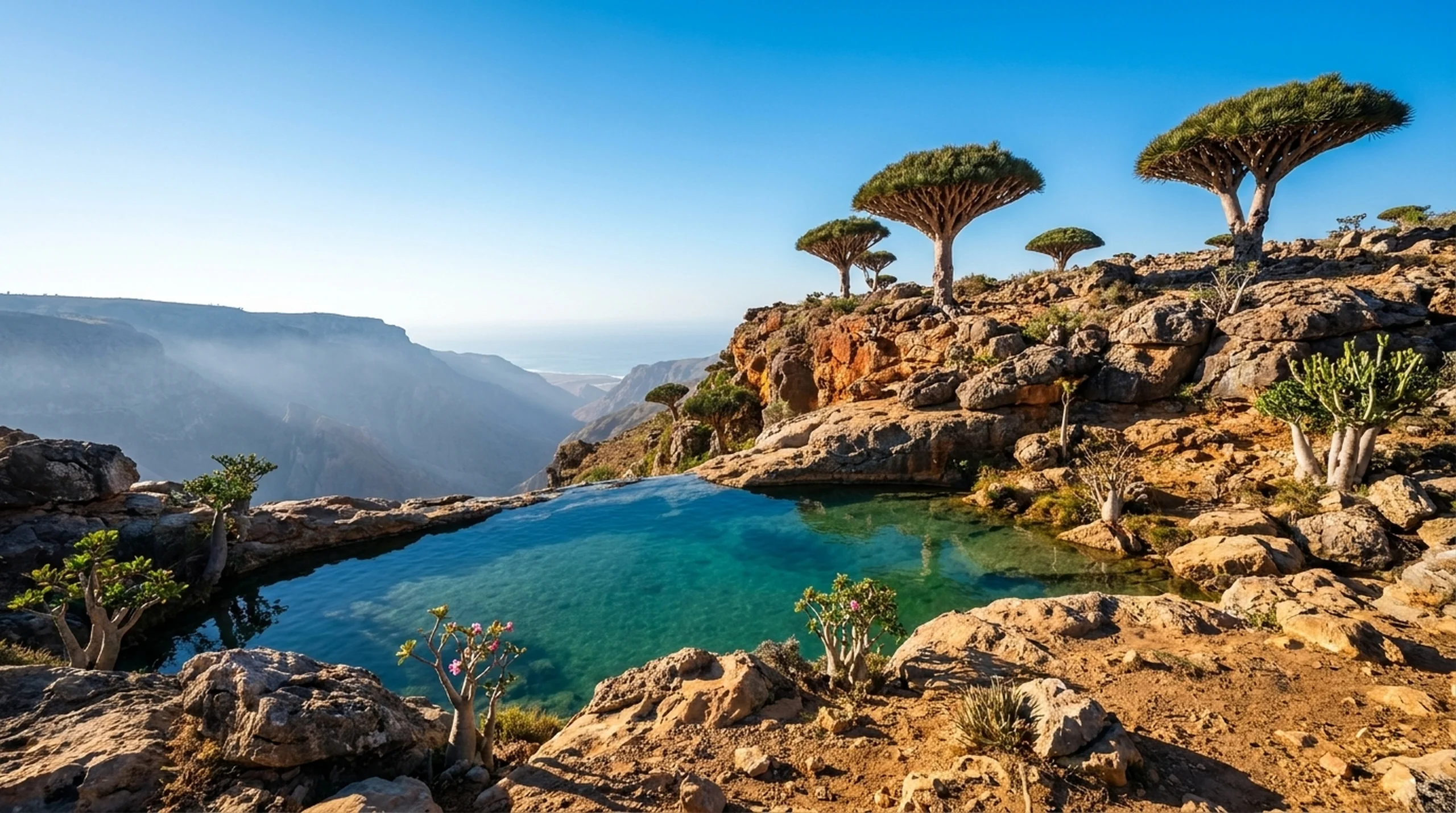
Homhil Protected Area
forestThe primary accessible Boswellia elongata woodland on Earth: 500-800 m on the standard trekking route; February-March for fresh resin exudation

Wadi Ayhaft
wadiOver 1,000 Boswellia ameero trees per 4 km²: photograph fresh resin exudate close-ups and wide-angle tree-in-canyon compositions

Wadi Shifa Infinity Pool
viewpointFrankincense trees line the descent trail from Homhil: photograph alongside dragon blood trees on the approach
Planning a trip?
Photographing it
Wide-angle (24-70mm) for environmental shots placing trees within limestone cliff landscapes. Close-up (70-200mm) for peeling bark texture and amber resin nodules: the resin detail is one of the most commercially striking close-up subjects on the island. Backlight through the open crown shows leaf translucency when leaves are present. Morning light hits pale bark at a low angle revealing the peeling texture. Ask local guides about current resin flow. Fresh exudate photographs differently from hardened nodules.
Worth knowing
Socotra hosts 11 of the world's 24 known frankincense tree species, nearly half of all frankincense diversity on Earth concentrated on a single island you could drive across in a few hours.
Conservation status
Endangered (IUCN uplisted from Vulnerable in 2025, following Maděra et al. 2024 study). Cyclones Chapala and Megh (November 2015) destroyed 38% of the Homhil population directly, with 29% more dying in the following two years. Overgrazing prevents sapling regeneration, a slow-motion population collapse in progress. CITES listing considered in 2025 but opposed due to risk of eliminating economic incentives for local community conservation.