
Socotra Bottle Tree Adenium obesum subsp. socotranum
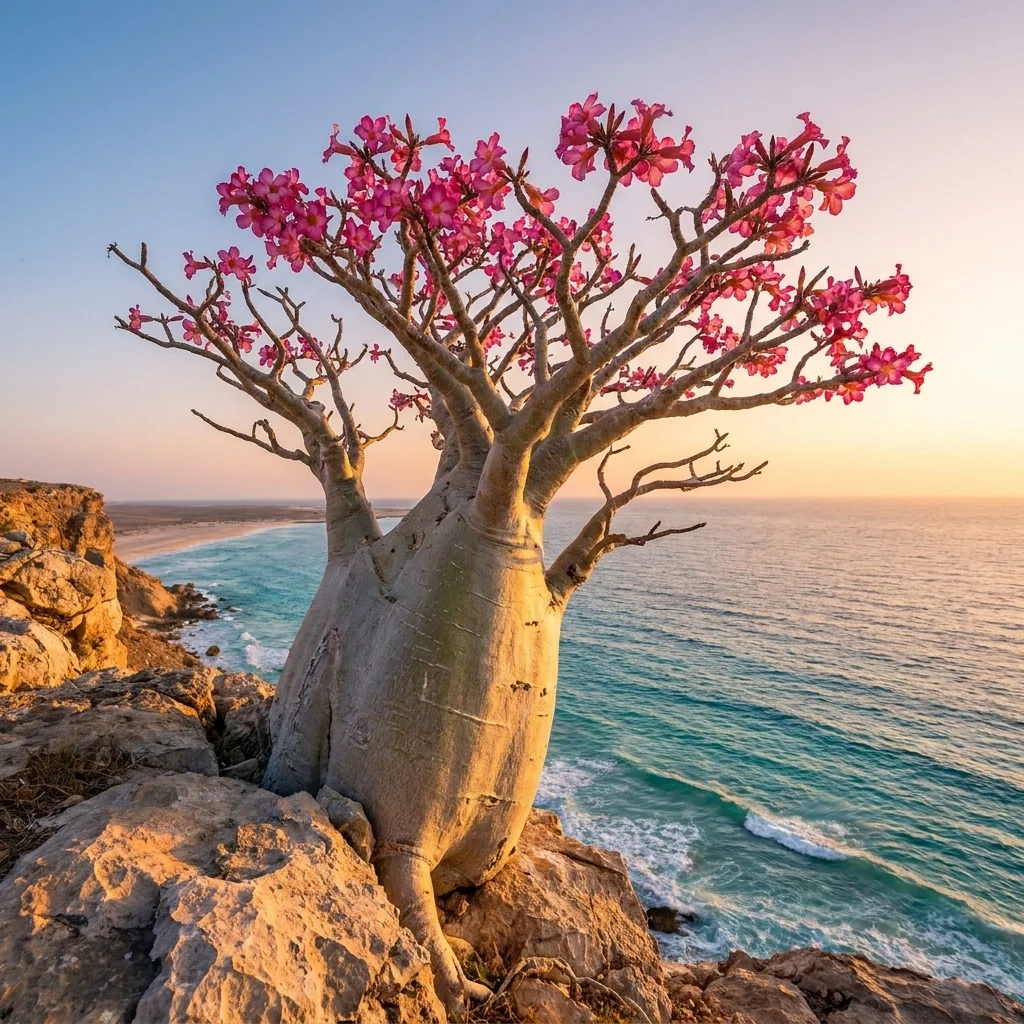
The most dramatically shaped plant on Socotra after the Dragon Blood Tree, a succulent with a massively swollen trunk base (caudex) reaching 4-5 metres tall and up to 2.4 metres in diameter. Smooth, pale grey-green, and water-storing. For a few weeks in February-March, while entirely leafless, it erupts in vivid pink-to-magenta trumpet flowers emerging directly from bare sculptural wood. One of the most photographed plants on Earth and a defining symbol of Socotra's alien landscape. Found island-wide on rocky limestone from sea level to 1,000 m; highest densities at Diksam Plateau and Homhil Protected Area.
Where to see it
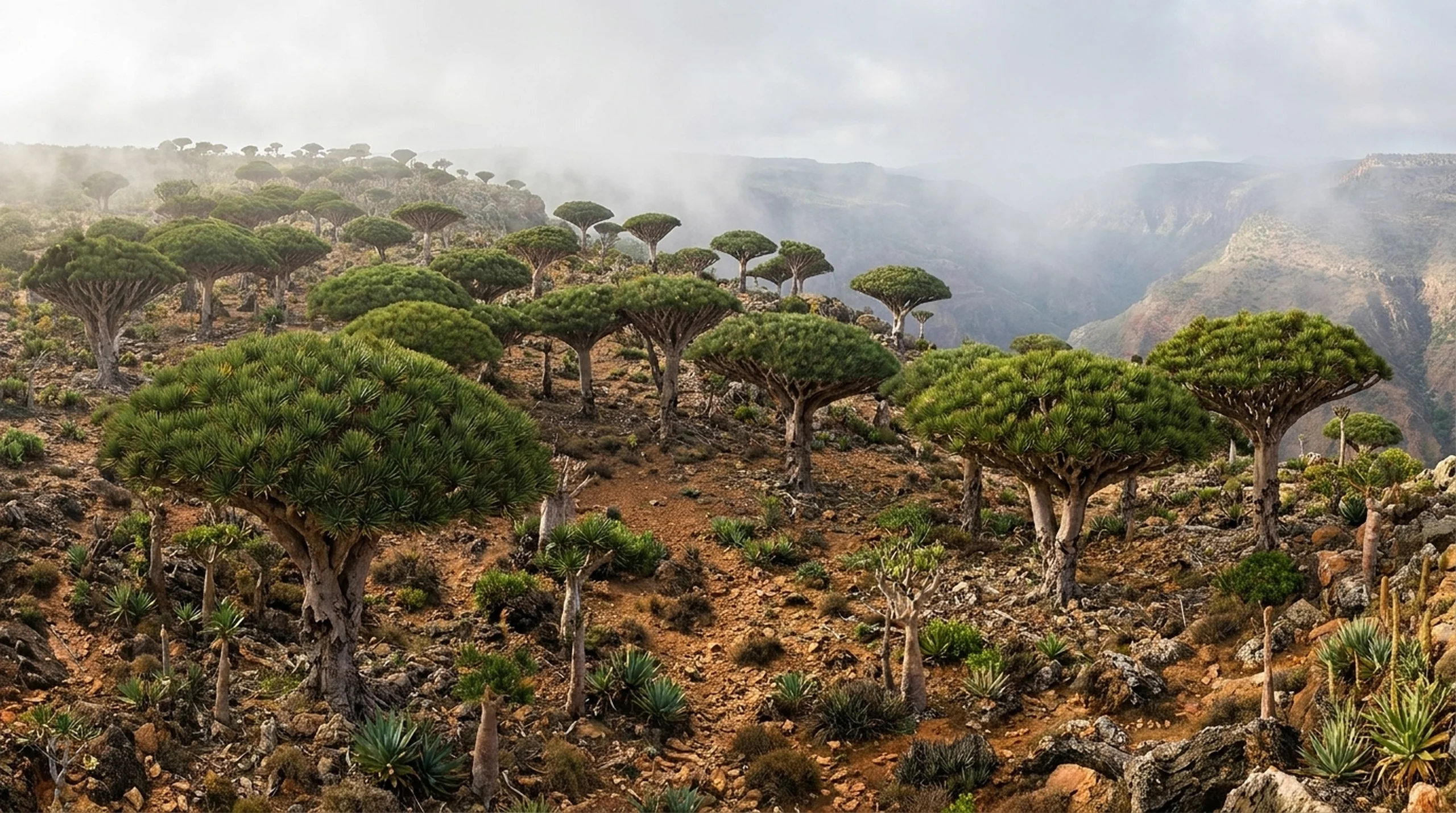
Diksam Plateau
forestMature specimens scattered across the plateau; February-March pink bloom is the hero shot
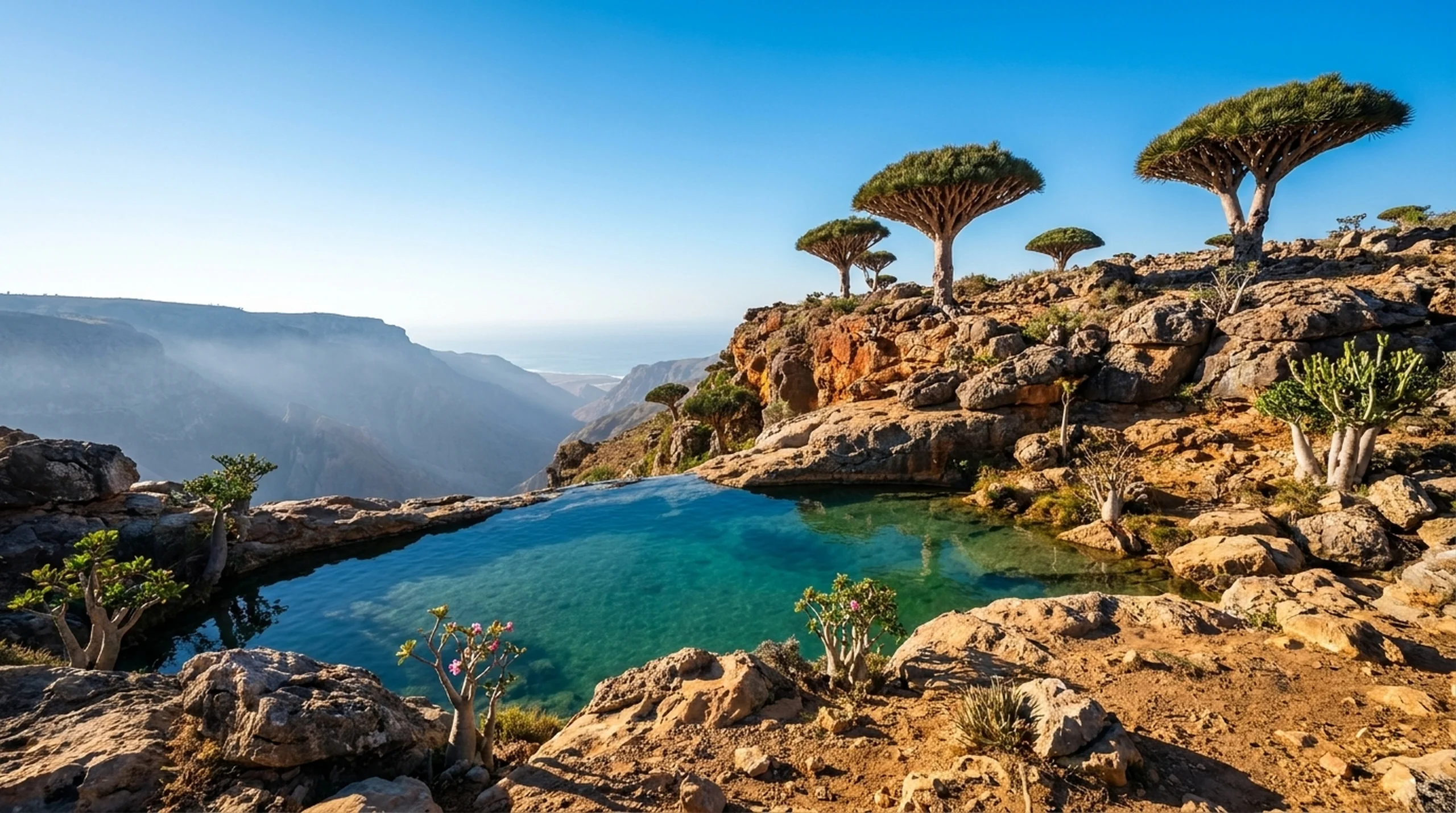
Homhil Protected Area
forestLarge specimens on cliff edges around the plateau and infinity pool trail
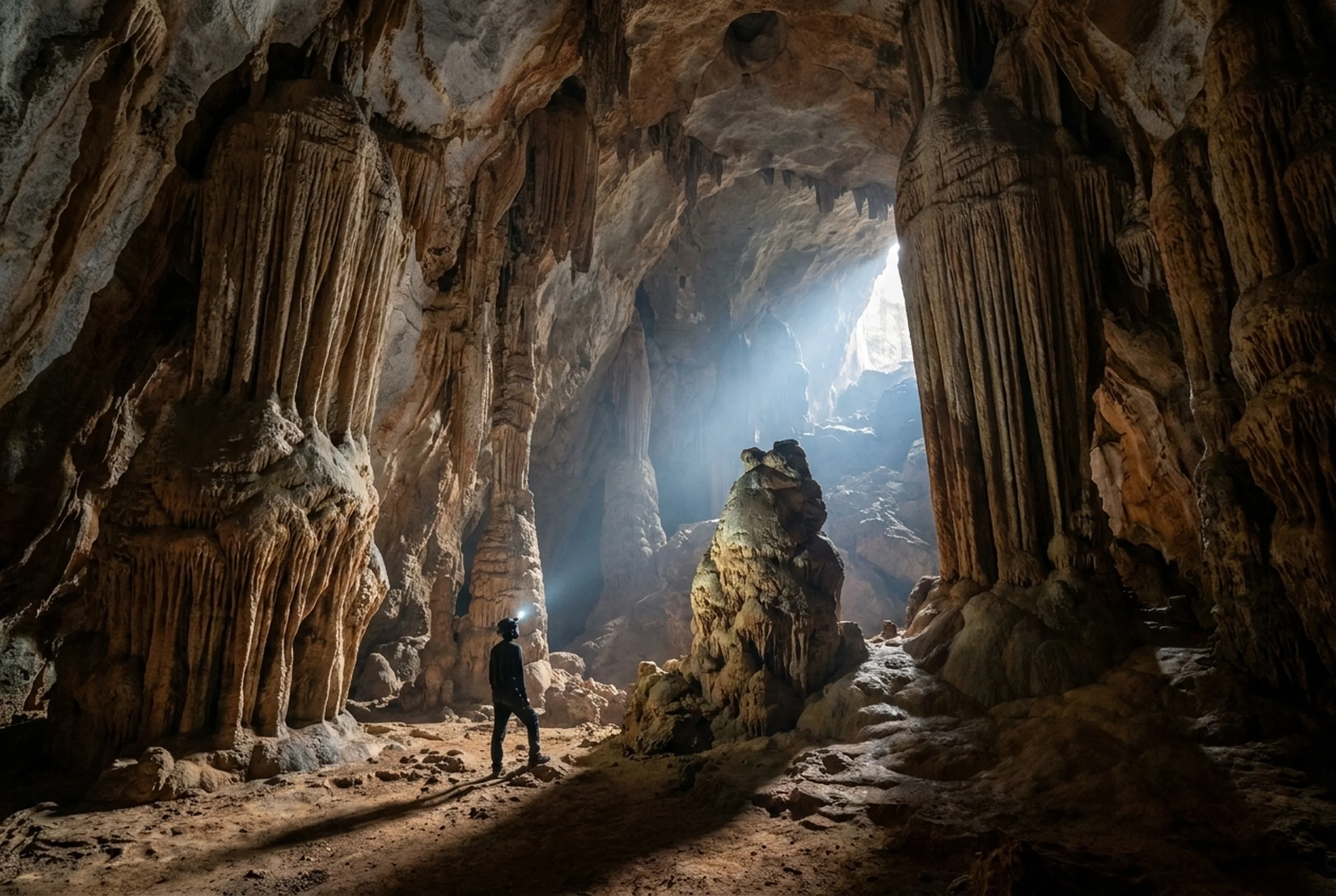
Hoq Cave
caveScattered individuals along the rocky approach path; pairs well with frankincense in the same frame

Moomi Plateau
viewpointSome of the largest Bottle Tree specimens on the island; Martian red plateau setting

Wadi Dirhur Canyon
wadiLarge specimens growing directly from canyon walls at mid-height; bracket against sky from canyon floor

Wadi Kalisan
wadiBottle Trees on the canyon limestone walls; part of the mixed succulent flora on the talus slopes

Wadi Shifa Infinity Pool
viewpointBottle Trees and frankincense line the descending trail from Homhil to the infinity pool
Planning a trip?
Photographing it
Wide-angle (24-50mm) for environmental portraits showing full caudex form against plateau or sky. Telephoto (70-200mm) for isolating flower clusters. Backlight at golden hour makes the pale trunk glow and pink flowers translucent: shoot with sun behind or to the side. The leafless flowering state (Feb-March) is dramatically more photogenic than the leafy phase. Look for cliff-edge specimens for compression with telephoto.
Worth knowing
A single mature specimen can hold hundreds of litres of water in its trunk, allowing it to bloom spectacularly during the dry season when most desert plants look dead.
Conservation status
Not formally assessed at subspecies level. Parent species Adenium obesum is Least Concern; endemic subspecies treated as Data Deficient. Threatened by overcollection for the international succulent trade and habitat degradation from livestock overgrazing preventing seedling regeneration. UNESCO World Heritage status provides umbrella protection only.