
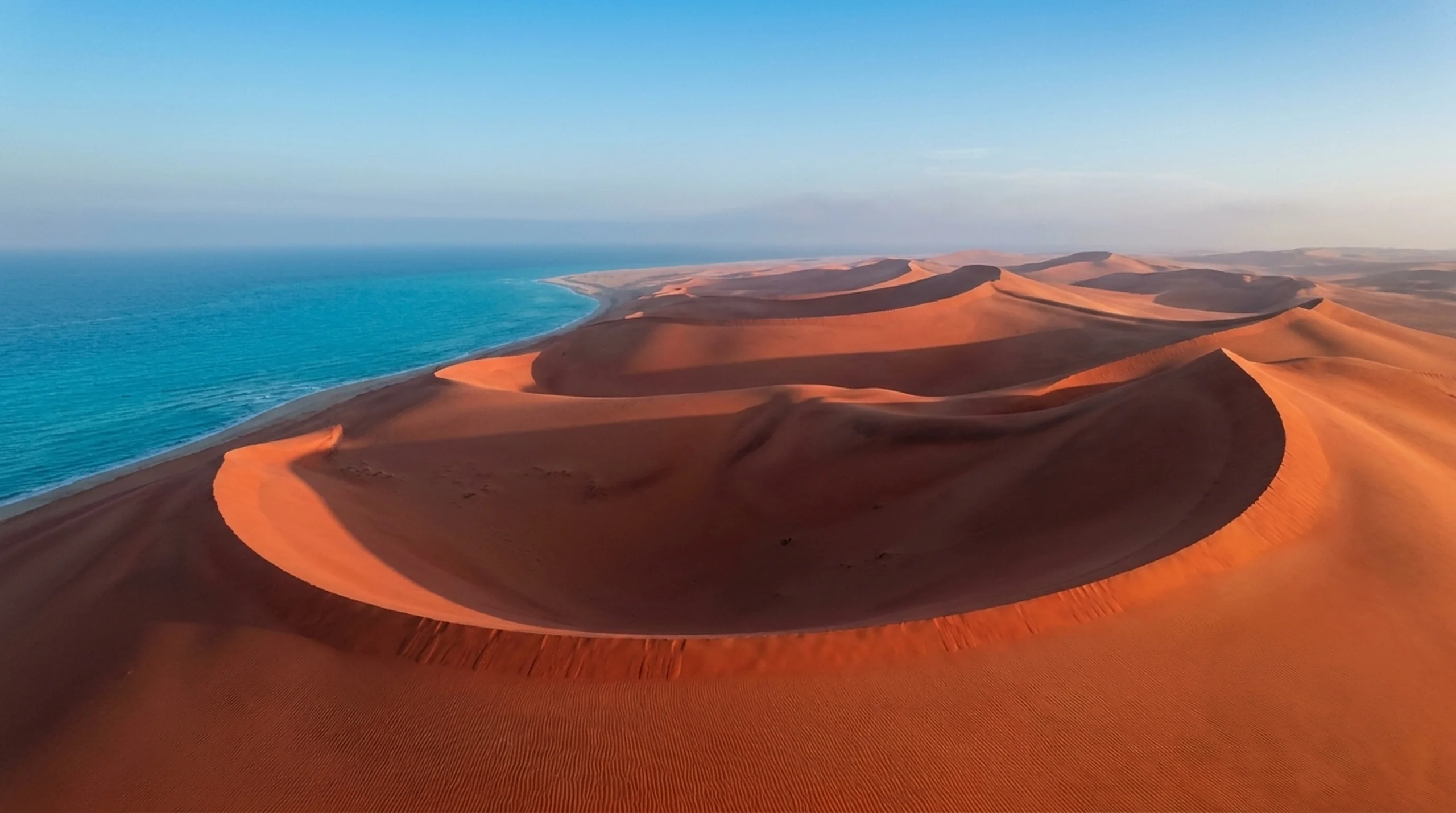
Zahek Dunes
A rolling dune field on the north coast with a distinctive purple mountain range as backdrop. At sunset the sand shifts from gold to amber to deep orange while the mountains turn purple behind — a colour range that makes Zahek one of the most reliably photogenic sunset locations on the island. Wind is calmer here than at Arher.
01
Why it's special
The gold-to-purple colour shift at sunset is specific to this location — the particular angle of the mountains and the way the dunes face west creates it. Most drone shots you've seen from Socotra dunes were taken here.
02
What to expect
A rolling dune field on the north coast with a distinctive purple mountain range as backdrop. At sunset the sand shifts from gold to amber to deep orange while the mountains turn purple behind — a colour range that makes Zahek one of the most reliably photogenic sunset locations on the island. Wind is calmer here than at Arher.
03
Reality check
Coming soon.
Photography Intelligence
Shoot it right.
The case for Zahek Dunes
Sunset works better here than sunrise · aerial work is genuinely worth it · midday light is harsh and rarely worth prioritising.
Best time to shoot
Sunset — 1 hour before to 20 minutes after
Sunrise or sunset?
Essential. The gold-purple colour shift only exists here at this time. Arrive 45 minutes before sunset to set up.
Light direction notes
Sun sets to the west. The dunes face west so the primary face is fully lit. The mountains catch the last light from the north-east.
Drone timing
Drone-friendly for sunset. Wind conditions are moderate. The dune ridge from above at sunset gives the gold-purple colour contrast clearly. Fly south along the ridge to keep the mountains in frame.
Conditions to avoid
Midday sun flattens contrast and burns out highlights; breezier afternoons can unsettle a tripod; outside oct, nov, dec, jan, feb, mar, apr, conditions become unreliable.
Composition tips
Shoot the dune ridge with mountains beyond. The leading line of the ridge edge creates depth. Include a human silhouette on the ridge for scale against the purple sky. The shadow valleys between dunes deepen as the sun drops — wait for them.
Lens suggestions
Wide lens recommended. Open landscapes reward 16–35mm to capture sky-to-ground sweep.
Reality check
The purple mountain range to the north-east catches alpenglow at sunset while the dunes shift from gold to amber. Wind is lower here than at Arher. The dunes are more accessible — no cliff scramble, flat approach from the road.
Coming soon·Sun-path overlay with date-aware azimuth and elevation per location.
FAQ
About Zahek Dunes
What is Zahek Dunes known for?+
What time of day is best at Zahek Dunes?+
What months can you visit Zahek Dunes?+
Can you fly a drone at Zahek Dunes?+
Do you need a guide to visit Zahek Dunes?+
Is Zahek Dunes safe to visit?+
Nearby & similar
Related places
Keep reading
Related guides
Is Socotra safe to visit?
Socotra is not mainland Yemen, and violence has not reached the island. But in January 2026 armed conflict on the mainland grounded flights and stranded hundreds of tourists for days. That is the real risk, and it is not weather.
Read
The best time to visit Socotra
October through April is the only realistic window. From May to September the Khareef monsoon brings sustained 50-knot winds and most operators shut down. February and April are the two best months.
Read
Cost of a Socotra trip
Packages start around $1,300 per person for eight days, plus roughly $950 to $980 for the weekly Jeddah charter. A realistic all-in figure is $3,000 to $4,000 before international flights.
Read
Have a photo of Zahek Dunes?
Submit it to the gallery — we credit you with a link to your site and Instagram.