
Socotran Blue Tarantula Monocentropus balfouri
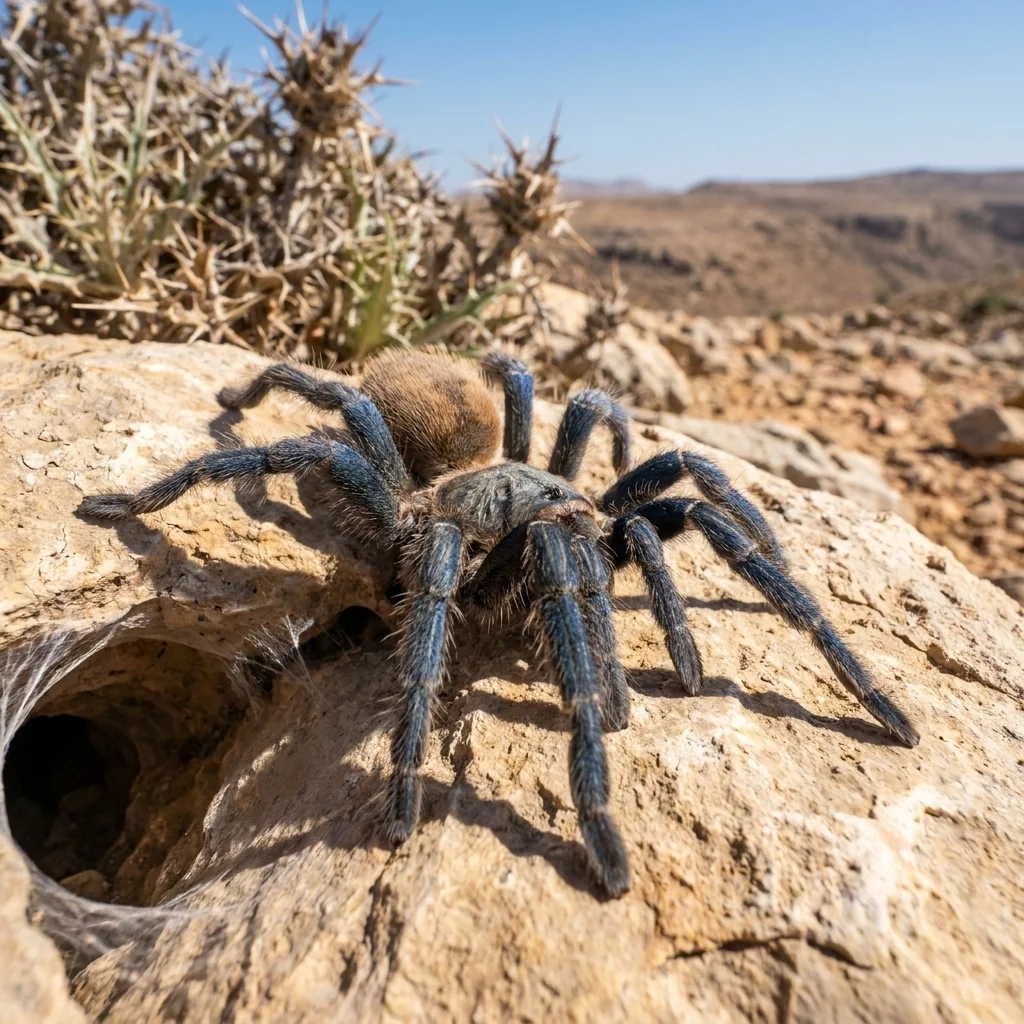
One of the most visually striking spiders in the world and the only blue tarantula found outside of southeast Asia. Adult males display vivid blue-grey legs and a contrasting tan abdomen; females are larger, reaching 12 to 15cm leg span, and are a more muted brown. Both sexes exhibit unusual cooperative behaviour: the species is one of only a handful of tarantulas that tolerate communal living, with multiple females and juveniles sharing a burrow system.
The venom has not been formally documented in humans. Bites are not considered dangerous based on all available evidence, but no clinical study exists. Handle only with guide supervision.
Found across the highland and plateau zones, particularly in rocky areas with loose soil. Diksam Plateau and Homhil Protected Area are the most reliable sighting locations. Nocturnal, easiest to spot by torchlight near burrow entrances after dark. They are endemic and strictly protected; do not collect, disturb burrows, or remove individuals. The species commands significant value in the exotic pet trade, which has driven illegal collection; do not photograph in ways that reveal location specifics.
Planning a trip?
Photographing it
Nocturnal: find by torchlight scanning near burrow entrances after dark. Ask your guide to locate active burrows before nightfall. A 100mm macro or 70-200mm with macro extension is ideal. Red light preserves your night vision and causes less disturbance than white. The vivid blue colour reproduces best with a single off-axis softbox flash rather than direct frontal flash. Do not share images that reveal specific burrow GPS locations. Illegal collectors actively mine social media for exactly this information.
Worth knowing
One of only a handful of tarantula species in the world that lives communally: multiple females and juveniles share burrow systems without aggression. Most tarantulas are solitary and fiercely territorial; Socotra's isolation appears to have selected for cooperative living as a strategy against the island's harsh seasonal conditions.
Conservation status
Not assessed on the IUCN Red List. Strictly protected under Yemeni national law. Significant threat from illegal collection for the exotic pet trade: commands high prices in European and Asian markets. Do not photograph in ways that reveal specific burrow locations. No formal population census exists.