
Socotra Chameleon Chamaeleo monachus
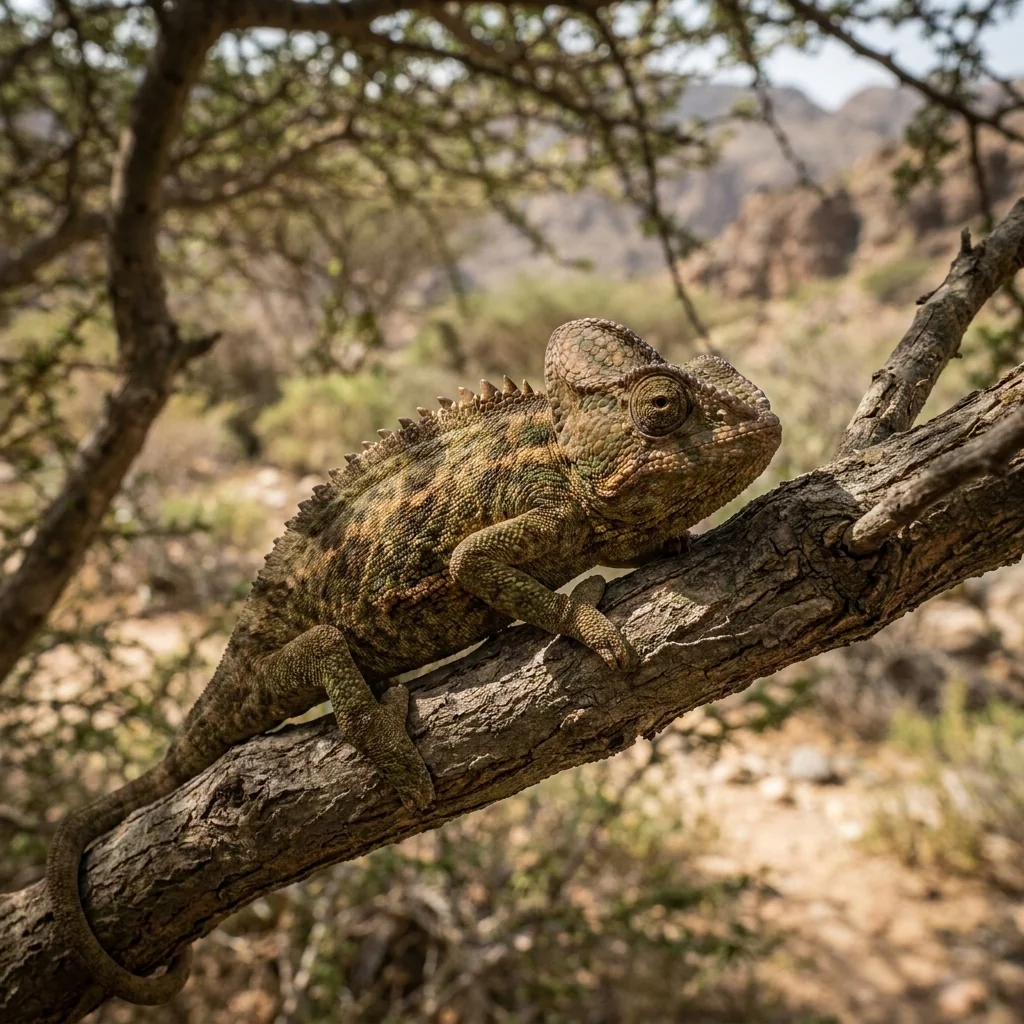
The largest chameleon endemic to Socotra, reaching up to 38.5 cm. Defined by exceptionally large occipital lobes at the rear of the head, among the most pronounced of any chameleon species globally, creating a monk's-hood silhouette that inspired the name monachus (monk). A prominent dorsal crest of conical scales runs from neck to tail. Resting coloration is green, brown, or black; males display light blue markings; gravid females show vivid orange zones. Diurnal and arboreal: spends active hours in shrub and tree canopies up to 6 metres. Mating October-November; egg-laying December; hatching April-May. Clutch size 32-52 eggs, among the largest of any chameleon.
Where to see it

Wadi Ayhaft
wadiBest accessible chameleon habitat on the island; scan wadi shrub margins at 1-3m height in early morning

Wadi Dirhur Canyon
wadiShrub margins on the canyon slopes support chameleon populations; arboreal: look in the canopy

Wadi Kalisan
wadiScan shrub margins 1-3 m up; best sighting window October-November (mating season) and April-May (hatchlings)
Planning a trip?
Photographing it
100mm macro or 70-200mm with close focusing. Scan slowly along wadi shrub margins at 1-3 m height. Early morning (07:00-10:00) when chameleons bask to warm up, more exposed than later in day. Approach very slowly; any sudden movement triggers immediate retreat. A slightly elevated position looking down into shrubs reveals them more easily than eye-level. Diffused light or flash-fill useful in deep wadi shade.
Worth knowing
Socotra's chameleons have been legally exported only 3 times in recorded history, making wild observation the only real way to ever see one.
Conservation status
Near Threatened (IUCN 2021). Primary threat: overgrazing destroying wadi shrubland habitat. No captive breeding program. No species-specific legal protection beyond UNESCO umbrella. No formal population census exists.