
Dihamri Marine Reserve
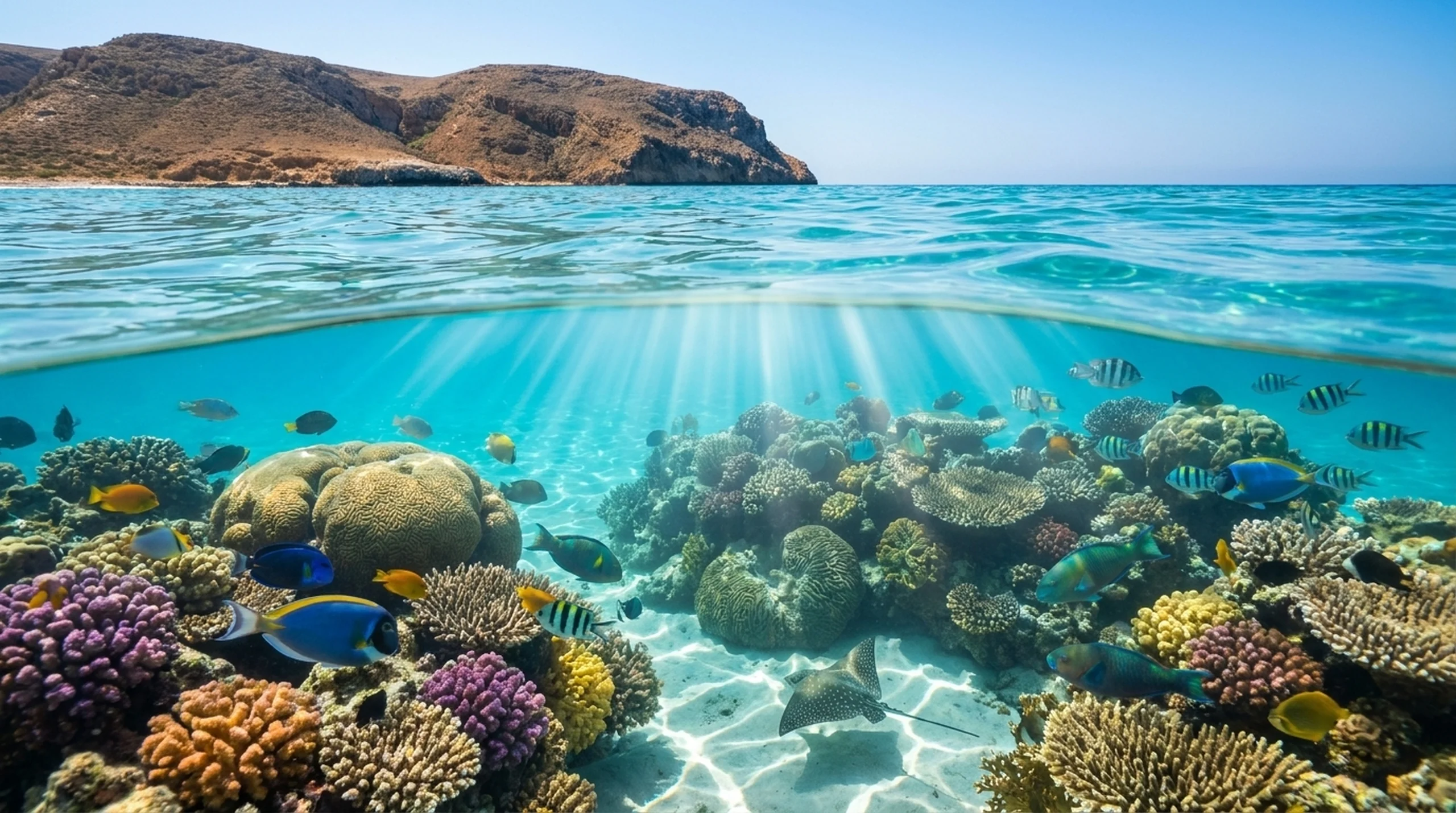
A protected marine reserve on the northeast coast with some of the best snorkelling on the island. Coral reef, reef fish, sea turtles, and occasional reef sharks in clear shallow water. Rocky shoreline with tide pools. Usually visited as a half-day stop.
01
Why it's special
The water clarity here is exceptional for the Arabian Sea. You don't need to go deep — the reef starts at 1-2m and the turtle sightings are reliable in the morning when the water is calmest.
02
What to expect
A protected marine reserve on the northeast coast with some of the best snorkelling on the island. Coral reef, reef fish, sea turtles, and occasional reef sharks in clear shallow water. Rocky shoreline with tide pools. Usually visited as a half-day stop.
03
Reality check
Coming soon.
Photography Intelligence
Shoot it right.
The case for Dihamri Marine Reserve
Light depends on season — check the conditions block · plan for ground-level frames · midday light is harsh and rarely worth prioritising.
Best time to shoot
Morning — water clarity peaks before any boat activity
Sunrise or sunset?
Turtles most active. Water clearest. Reef fish at the surface.
Light direction notes
Coastal orientation matters — check whether the shoreline faces east (sunrise) or west (sunset). Side-light from a low sun shapes the water best.
Drone timing
Drone permitted over water only (not over the beach or reserve boundary). The reef edge from above shows clearly in the morning — strong blues and reef textures.
Conditions to avoid
Midday sun flattens contrast and burns out highlights; outside oct, nov, dec, jan, feb, mar, apr, conditions become unreliable.
Composition tips
For water photography: wide angle for turtle encounters, macro for tide pool subjects. Drone for the reef edge pattern from 30-50m altitude. The rocky shoreline makes strong foreground for land-based shots looking out to sea.
Lens suggestions
Wide lens recommended. Open landscapes reward 16–35mm to capture sky-to-ground sweep.
Reality check
Snorkelling is the primary activity. Reef starts at 1-2m depth along the rocky shore. Sea turtles are most active in the morning. Tide pools at the rocky sections have interesting macro subjects. The reserve is well-enforced — no collecting, no anchoring.
Coming soon·Sun-path overlay with date-aware azimuth and elevation per location.
FAQ
About Dihamri Marine Reserve
What is Dihamri Marine Reserve known for?+
What time of day is best at Dihamri Marine Reserve?+
What months can you visit Dihamri Marine Reserve?+
Can you swim at Dihamri Marine Reserve?+
Can you fly a drone at Dihamri Marine Reserve?+
Do you need a guide to visit Dihamri Marine Reserve?+
Is Dihamri Marine Reserve safe to visit?+
Nearby & similar
Related places
Keep reading
Related guides
Is Socotra safe to visit?
Socotra is not mainland Yemen, and violence has not reached the island. But in January 2026 armed conflict on the mainland grounded flights and stranded hundreds of tourists for days. That is the real risk, and it is not weather.
Read
The best time to visit Socotra
October through April is the only realistic window. From May to September the Khareef monsoon brings sustained 50-knot winds and most operators shut down. February and April are the two best months.
Read
Cost of a Socotra trip
Packages start around $1,300 per person for eight days, plus roughly $950 to $980 for the weekly Jeddah charter. A realistic all-in figure is $3,000 to $4,000 before international flights.
Read
Have a photo of Dihamri Marine Reserve?
Submit it to the gallery — we credit you with a link to your site and Instagram.